Keep the explanation
beside the record.
An agreement without a version, a research note without a source or a decision without its circumstances can be difficult to interpret. A useful collection makes the relationship between an item and its context visible.
A proposed business-record workspace might connect a document with its owner, current status and the decision it supported. An editorial library might connect a selected source with the question it helps answer. These are different uses of the same underlying idea: an item should not have to explain itself alone.
Define who can use it.
Revisit that decision.
Keeping something in a central place does not settle who should be allowed to open, change or share it. A product needs a clear access model for its actual audience and purpose.
NIST’s Zero Trust Architecture explains that trust should not follow merely from network location or asset ownership, and distinguishes authentication and authorization before resource access. That provides useful context for separating a place from permission to use what it holds. Read NIST SP 800-207.
This reference does not make the CorVault concept a zero-trust implementation or establish a security certification. Any real controls would need design, implementation and assessment.
Give the collection
a responsible owner.
Someone must decide what belongs, resolve conflicting versions and review material that may no longer be useful. Without that responsibility, a collection can become a place where uncertainty accumulates.
A small first product could make this visible: a named record owner, a review date and a reason for keeping the item. An AI-assisted interface could help people locate material, but it would not replace ownership, source checking or decisions about access.
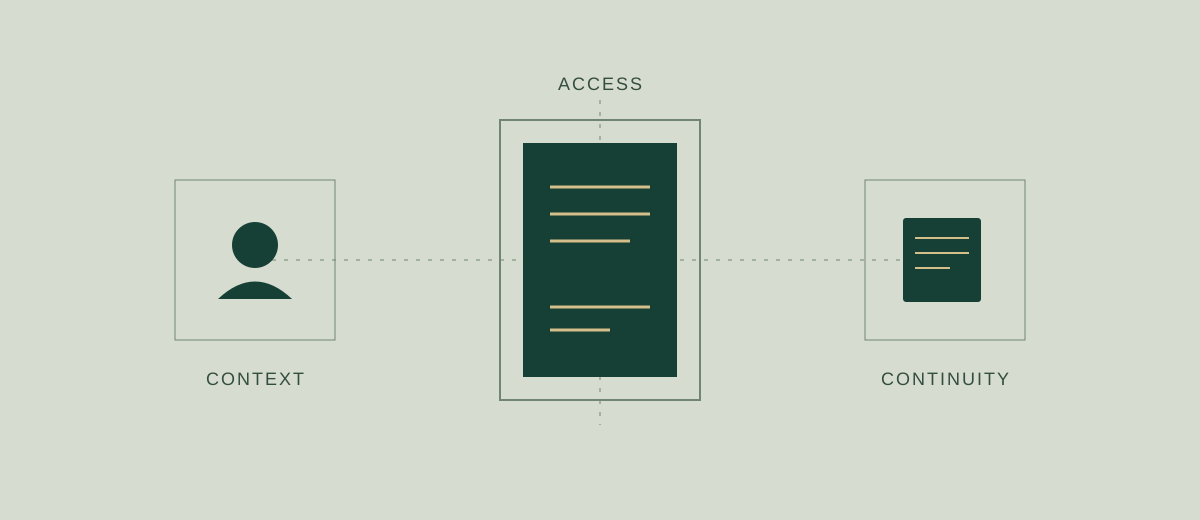
Plan for the day
something changes.
A person leaves. A project ends. A supplier changes. The value of a collection can depend on what happens during those transitions.
A future service would need to explain export, retention, deletion and the limits of continued access. Backup and recovery also require their own design and verification; a reassuring name is not evidence that information can be restored.
Keeping everything forever is not a default answer. The useful commitment is a clear account of what is kept, why, for how long and under whose responsibility.
Start with one
important collection.
For a proposed records workspace, begin with a bounded task: a leadership team preparing a handover of its current agreements and decisions. Define the records, their owners, the people receiving them and the context those people need.
For a curated knowledge business, begin with a specific field and an editorial selection process. The collection earns its place through relevance and upkeep.
CorVault offers a naming idea around a valuable centre. A future business would need to establish the service and assess its intended use within the existing naming landscape.
Source and scope
NIST — Zero Trust Architecture, SP 800-207 supports the limited access-control context above. The remaining discussion is original naming and product-concept analysis. Reviewed September 21, 2026.
CorVault.com is an independent domain presentation, unaffiliated with Seagate or its Exos CORVAULT products. No storage system, managed service, compliance outcome or security guarantee is offered.